
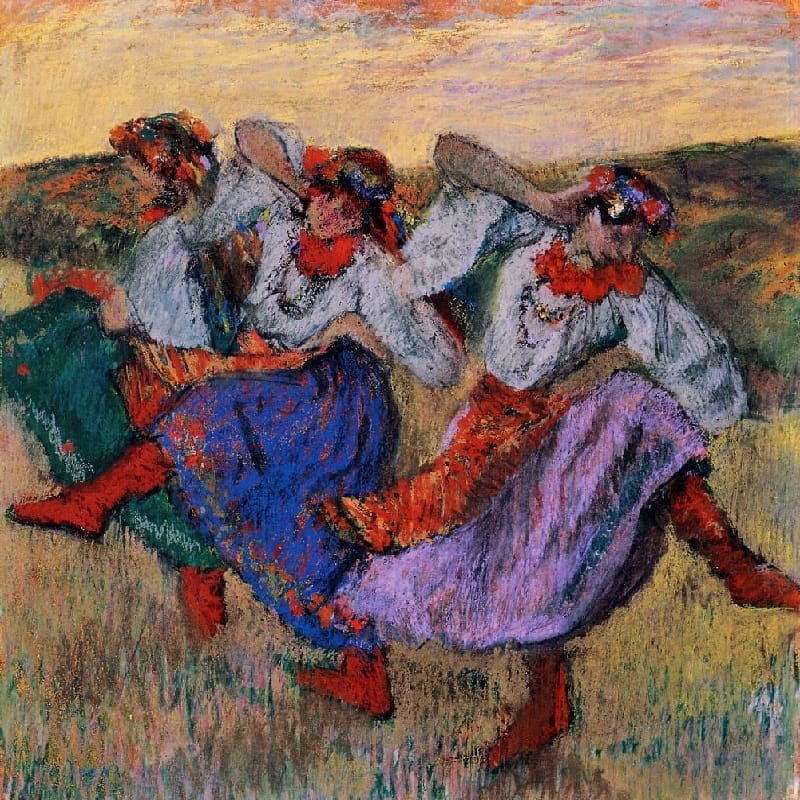
Folk dance is an expressive form of national and cultural heritage that reflects the character and traditions of a particular people or region. Through movement, rhythm and imagery it reveals people’s inner qualities: openness, energy, a sense of humour and wisdom, as well as the beauty and grace of movement.
Traditional culture includes many regional styles, each with its own music, costumes, manner of performance and choreographic patterns. Folk dances can be performed by large groups or by soloists, and their forms vary widely — from round dances and couple dances to competitive dance-offs and staged compositions. Round dances are the oldest form of dancing together: participants hold hands and move in a circle, creating ornamental patterns or acting out scenes. Lively folk dances are faster and more temperamental, with bold, sometimes improvised movements that often reveal the dancer’s personality. Competitive elements play a special role, as dancers show off their skill in a dialogue or a “dance-off”.
Many folk dances are accompanied by colourful costumes, live music and theatrical elements, creating a complete artistic image in which the music, movement and culture of a people merge into one.


